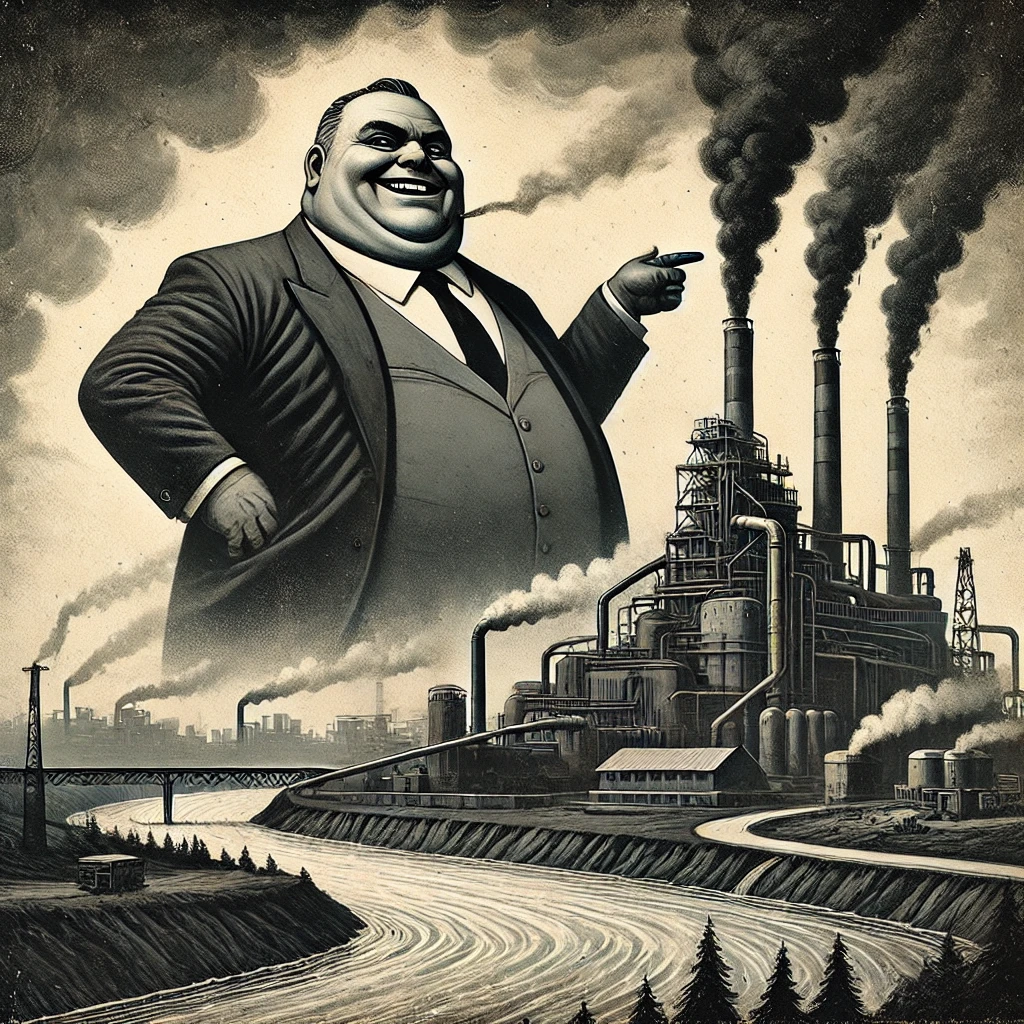
Irving Sucks: Glyphosate Spraying, Clear-Cuts, Layoffs and One Family's Grip on New Brunswick

Clear-cut forest in New Brunswick
▼ Read the evidence & sources ▼

The Receipts

This site is opinion: angry, loud, and ours. But every story below is anchored to public reporting, court decisions, and government records. Read the sources. Draw your own conclusions. Then get mad too.

Still spraying glyphosate on our Crown forests, a decade after the WHO's cancer warning

Aerial herbicide spraying over New Brunswick forest

Every year, roughly 15,000 hectares of New Brunswick's public Crown forest are doused with herbicides, glyphosate chief among them, to kill hardwoods and protect softwood plantations. In 2015 the WHO's cancer research agency (IARC) classified glyphosate as a probable human carcinogen. In 2021 a legislative committee made recommendations on its use. By the September 2025 hearings, senior officials still couldn't explain why those recommendations hadn't been implemented, while warning of "significant impact to industry" if they were. Jim Irving himself told the committee a glyphosate ban would be "disastrous" for his company. Whose forest is it again?

A 2025 report by Safe Food Matters, with data from the Wilderness Committee and Stop Spraying New Brunswick, found cutblocks sprayed two, three or more times, contrary to the assumptions behind federal approval. Environmental groups have mapped spraying inside protected watersheds that supply drinking water.

They fired the doctor who was studying the spray

Dr. Eilish Cleary, New Brunswick's Chief Medical Officer of Health, was studying the public health impacts of glyphosate when the province put her on leave in November 2015, then fired her "without cause" a month later. No explanation was ever given. The government fought to keep the price tag secret until Radio-Canada dragged it out through the courts: $720,000 of your money to make the question go away. In 2023, NB doctors published an open letter reporting high glyphosate levels in most tested patients with atypical neurological disease, asking once again for a real investigation.

Irving v. Wolastoqey: the courts carve up a title claim

New Brunswick forest landscape

Six Wolastoqey First Nations claimed Aboriginal title over roughly half of New Brunswick, their unceded territory. J.D. Irving and other timber giants fought it, and in December 2025 the NB Court of Appeal ruled that Aboriginal title can't be declared over the companies' privately held land, pulling their vast freehold forests out of the claim. In May 2026 the Supreme Court of Canada declined to hear the appeal. The colonial land grab, laundered through a century of Crown grants, stays legal.

The protected-forest shell game

Logging operation in a New Brunswick forest

In early 2026, J.D. Irving went door-to-door to municipalities pitching a swap: let us log 32,000 hectares of protected conservation areas on our Crown timber licence, and we'll conserve some forest near your town instead. At least eight municipalities signed on. Protected is supposed to mean protected, not "protected until the biggest licensee wants the wood."

Irving Paper cuts its workforce in half, blames the power bill

Industrial paper mill workers

February 2025: Irving Paper cut 140 jobs, half its Saint John workforce, and pointed the finger at electricity rates. Generations of families gave their working lives to these mills; the loyalty only ever flows one way. When a single family employs this much of a province, every layoff doubles as leverage over the politicians who set those rates.

A public park into a parking lot

Irving pulp mill in Saint John

In 2025, J.D. Irving asked Saint John to hand over part of Wolastoq Park, public parkland, for a parking lot next to its west side pulp mill. Council floated a compromise and caught hell from the business lobby for not rolling over fast enough. The same mill's operator settled 15 pollution charges with the Crown back in 2018. They pave paradise; we get the exhaust.

One family shouldn't own a province

Collage representing Irving's industrial holdings

Timber. Oil. Shipbuilding. Trucking. Food. Media. For decades the Irvings owned nearly every English-language newspaper in New Brunswick, and critics have long documented how rarely the family's businesses faced hard coverage at home. Journalists outside the province call New Brunswick "the company province." This isn't a free market. It's feudalism with better PR.

Royale: soft on your skin, brutal on rainforests

Eucalyptus plantation harvested for pulp

Irving's tissue brands run on imported eucalyptus pulp from industrial plantations in the global south: monoculture tree farms that replace biodiverse ecosystems so your toilet paper feels premium. Green-certified logos on the package, sacrifice zones at the source.

The Irishtown fire: what was burning, and on whose land?

August 2025: the "115 Pit" wildfire near Irishtown, on Moncton's doorstep, put about 1,500 people on evacuation notice and threatened up to 900 structures before being contained at 45 hectares. The province suspended forestry operations, harvesting, skidding, thinning, across the woods while it burned. So here are the questions: what kind of forest did it start in, who manages that land, and why, months later, had investigators still not announced a cause? Residents deserve answers, not a file that quietly goes cold. If you have photos or records from the ground, get them to local media and the groups below.

Near You

Every August and September, herbicide spraying of Crown forest is mapped on the province's own GeoNB herbicide map and on forestinfo.ca, and the Conservation Council tracks the blocks near lakes, rivers and drinking-water watersheds. Find your county below, then check the map for spray blocks near your community. It's your forest.

Albert County

Riverview · Hillsborough · Salem · Alma · Elgin

The Turtle Creek watershed, the drinking-water supply for Greater Moncton, sits partly in Albert County. Mapping by environmental groups found spray permits issued on the southeast edge of that protected watershed. Check the map before you assume "protected" means untouched.

Carleton County

Woodstock · Hartland · Florenceville-Bristol · Juniper

J.D. Irving runs a sawmill at Juniper and harvesting across the upper Saint John River woods. Spray blocks appear in this county's Crown forest most seasons; look up Juniper and the Becaguimec country on the herbicide map.

Charlotte County

St. Stephen · St. Andrews · St. George · Blacks Harbour

Home to J.D. Irving's Lake Utopia Paper at St. George. The Fundy coast forest between the Magaguadavic and the St. Croix is working forest; check the map for blocks near Lake Utopia and Utopia's feeder streams.

Gloucester County

Bathurst · Caraquet · Shippagan · Tracadie

The Chaleur uplands south of Bathurst are heavily managed Crown timberland. Acadian Peninsula communities draw water and salmon from rivers that start in those sprayed headwaters.

Kent County

Bouctouche · Richibucto · Saint-Louis-de-Kent · Rexton

Bouctouche is where K.C. Irving was born and where the empire began. A century later, Kent County's Crown woods are part of the same industrial forestry machine, and the county's rivers, the Richibucto and the Bouctouche, run through it.

Kings County

Sussex · Hampton · Norton · Havelock

J.D. Irving operates a sawmill at Sussex, and the hills between the Kennebecasis and the Canaan are working forest. Check the map for blocks in the headwaters that feed the Kennebecasis, one of the province's best-loved trout and salmon rivers.

Madawaska County

Edmundston · Saint-Léonard · Lac Baker · Saint-François

The Conservation Council's lake analysis flagged spray blocks within five kilometres of Lake Baker and Lac Unique. The Madawaska highlands are among the most intensively managed softwood country in the province.

Northumberland County

Miramichi · Doaktown · Blackville · Rogersville

The Miramichi watershed, the most famous Atlantic salmon river system on Earth, drains vast tracts of sprayed and clear-cut Crown licence forest. The 2025 Miramichi-area wildfire burned out of control here for days while Irishtown smouldered near Moncton.

Queens County

Gagetown · Chipman · Minto · Cambridge-Narrows

The Conservation Council found spray blocks within five kilometres of Grand Lake and Washademoak Lake, two of the province's most popular cottage and swimming lakes. J.D. Irving runs a sawmill at Chipman.

Restigouche County

Campbellton · Dalhousie · Kedgwick · Saint-Quentin

J.D. Irving sawmills at Kedgwick and Saint-Quentin anchor some of the heaviest industrial forestry in New Brunswick, in the headwaters of the Restigouche, a river so prized its salmon pools are legendary. Check what's being sprayed above them.

Saint John County

Saint John · Grand Bay-Westfield · St. Martins

Ground zero: the pulp mill at Reversing Falls, the paper mill that cut half its workforce in 2025, the oil refinery, the shipyard, and the bid to turn part of Wolastoq Park into mill parking. One city, one family, every lever.

Sunbury County

Oromocto · Fredericton Junction · Tracy · Minto edge

The flat pine country between the Oromocto and Grand Lake is working forest laced with spray blocks most seasons. The Oromocto River system drains it toward the Wolastoq (Saint John River).

Victoria County

Grand Falls · Perth-Andover · Plaster Rock · Kilburn

The Conservation Council's lake analysis flagged spraying near Kilburn on the upper Saint John. The Tobique valley above Plaster Rock is licence country: clear-cuts, plantations, and the annual spray program.

Westmorland County

Moncton · Dieppe · Sackville · Salisbury · Irishtown

Greater Moncton's drinking water comes from the Turtle Creek watershed, where spray permits have been mapped inside the protected boundary. And in August 2025 the Irishtown "115 Pit" wildfire put 1,500 residents on evacuation notice; months later, still no announced cause.

York County

Fredericton · Nashwaak · Harvey · Stanley · McAdam

The Conservation Council's lake analysis flagged spray blocks within five kilometres of Lake Nashwaak, Lake George, Yoho Lake, Harvey Lake and Pokiok. Fredericton is also where the glyphosate hearings happen, and where the recommendations go to die.

Irving Sucks is an independent opinion and commentary site. It is not affiliated with any Irving company. Factual claims are drawn from the linked public reporting, court decisions and records; the rest is our opinion, and we're entitled to it. Spray-block locations change every season: always verify against the official GeoNB herbicide map.